

2020 Italian GP: The quali session
- Like
- Digg
- Del
- Tumblr
- VKontakte
- Buffer
- Love This
- Odnoklassniki
- Meneame
- Blogger
- Amazon
- Yahoo Mail
- Gmail
- AOL
- Newsvine
- HackerNews
- Evernote
- MySpace
- Mail.ru
- Viadeo
- Line
- Comments
- Yummly
- SMS
- Viber
- Telegram
- Subscribe
- Skype
- Facebook Messenger
- Kakao
- LiveJournal
- Yammer
- Edgar
- Fintel
- Mix
- Instapaper
- Copy Link
Let’s take a look at some of the data obtained from the qualifying session of the 2020 Italian GP.
Methodology
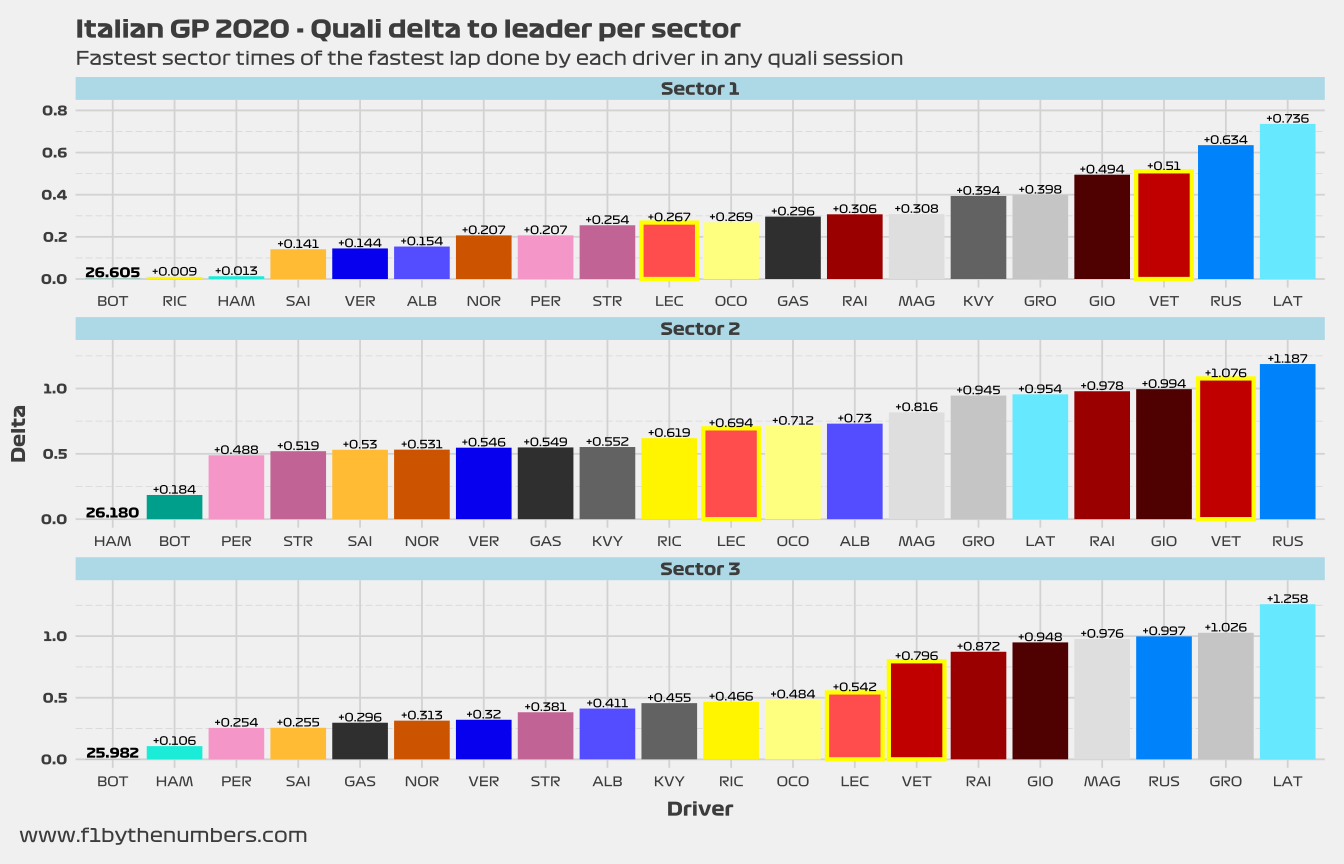
For the charts of the delta per sector data, I did two similar but not identical analyses. For the first one (fastest sector times of the fastest lap done by each driver) I filtered the data to contain the best lap done by each driver. Then, I got the best sector times for each one of the drivers, and calculated the delta from each one of them to the best sector time done in each of the respective sectors.
For the second chart (fastest sector times of each driver) I filtered the data to contain only the best sector times done by each driver. The rest of the process is identical to the one used in the first chart.
Delta to leader per sector
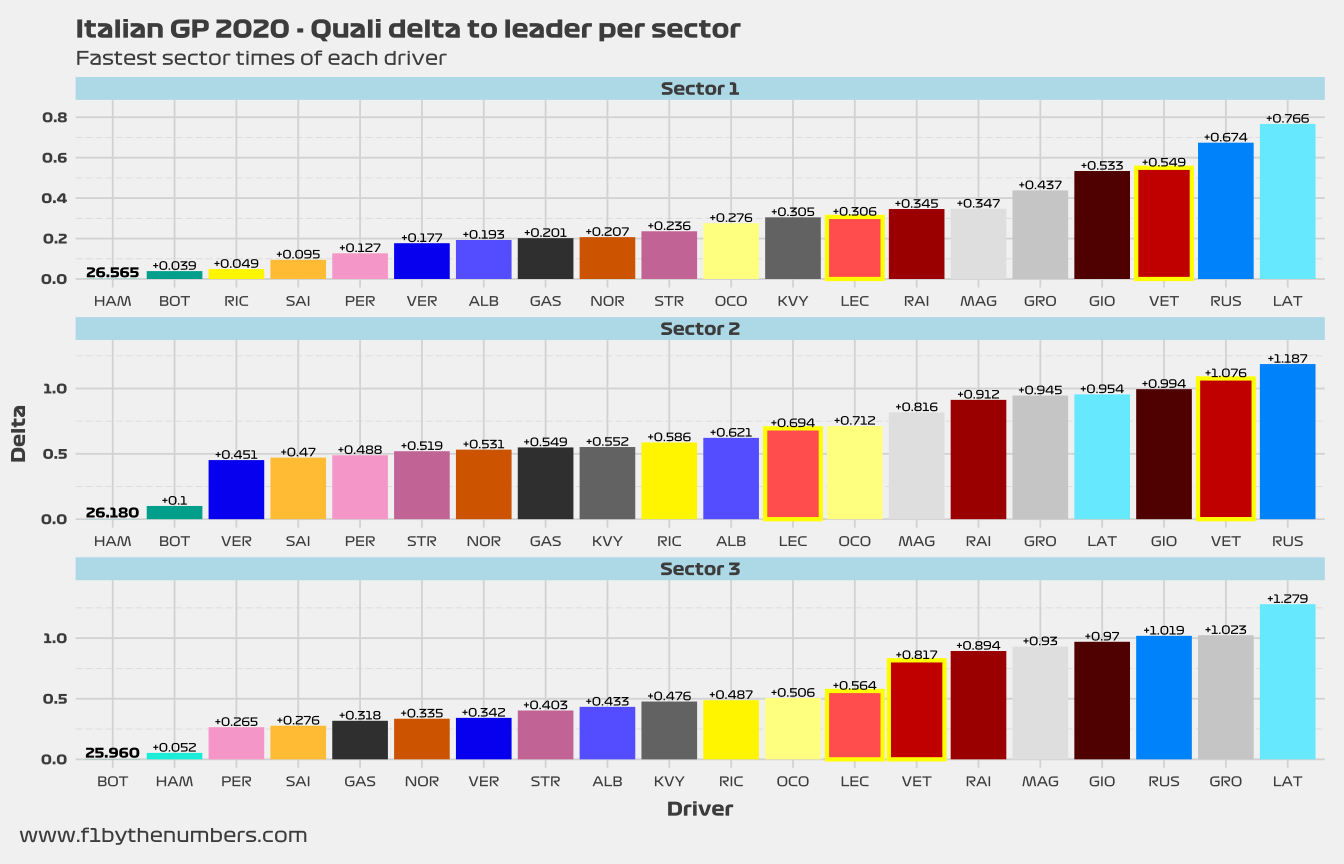
Mercedes dominated once again the quali session, now at the fastest track of the season. It didn’t matter that the so-called “party mode” was banned, the Silver Arrows are just too fast. If anything, it seems like the quali-mode ban may have affected Red Bull even more than Mercedes.
In sector 1, the top three drivers were separated by less than 15 thousand of a second when considering the data only from the fastest lap of each driver. If we consider the fastest sector times of each driver, we’ll see that the top four sector 1 times were separated by less than 1 tenth.
Sector 2 was totally owned by Mercedes. Lewis Hamilton posted an S2 time of 26.180 seconds, which was exactly 1 tenth faster than the second-best time of the session done by Valtteri Bottas. How dominant was Mercedes? Well, the third-fastest time done in this sector was 0.451 seconds slower than the time done by Lewis Hamilton.
In the final sector 3, Bottas took the top position in both best sector time and best sector time done during his fastest lap of the session. Lewis Hamilton trailed in both analyses, in one by half a tenth, and just over one-tenth in the other one.
I highlighted Ferrari in these charts just to understand the state of the team right now. Yes, Ferrari was bound to struggle in Monza after their poor showing in Spa, but the numbers are unacceptable for a team like the Scuderia. Charles Leclerc’s fastest S1 time was 3 tenths slower than the best of the day. In S2, Leclerc was once again the fastest Ferrari-powered driver, and he was still almost 7 tenths slower than Lewis. In S3, Leclerc’s best time was 564 thousands of a second slower than Bottas and ranked as the 13th fastest driver in this area.
Fastest speeds

If we get the fastest speed recorded by each driver according to the unofficial telemetry, we see that some drivers who weren’t among the top qualifiers still recorded very high top-end speeds.
Kimi Raikkonen and Antonio Giovinazzi lead in this category, despite them finishing in 14th and 18th place respectively. Alex Albon trails by less than 1 km/h, with Sebastian Vettel rounding the top four with a maximum speed of 360 km/h.
The top 3 finishers, Lewis Hamilton, Valtteri Bottas and Carlos Sainz, ranked in the bottom half of this category. In Mercedes’ case, they had too much for the rest of the field and didn’t even have to rely on the “party mode” or a strong tow to get the front row positions. Carlos Sainz’s data may indicate that they sacrificed a bit of top-end speed and got the balance just right in the corners.
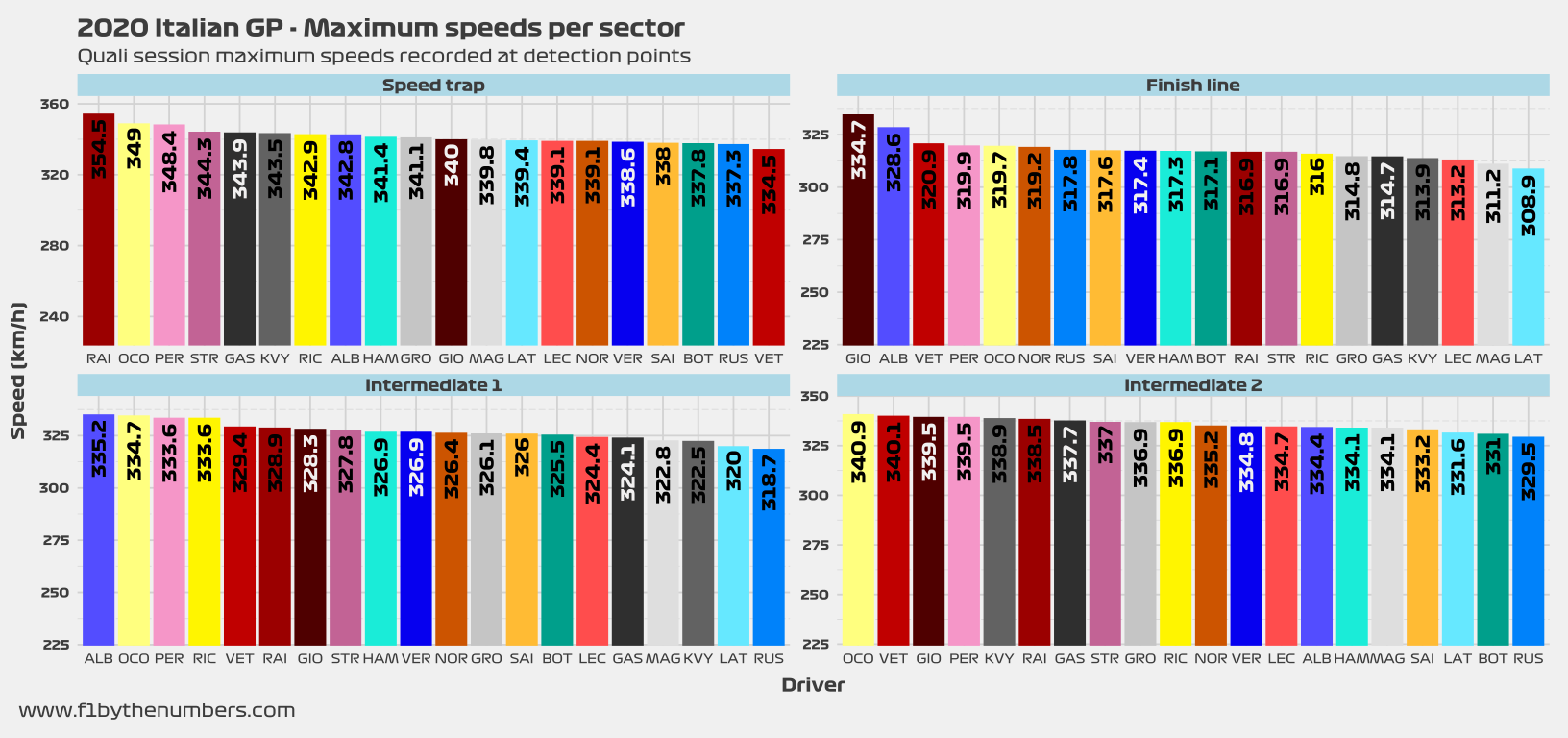
The speeds as recorded at the official detection points can give us a bit more insight into the importance (or lack of) of the top speeds. Take Sebastian Vettel for example. Yes, he was the slowest as the speed trap but ranked among the best at the finish line and intermediate 1 and 2 traps. He was still eliminated from Q1. How is this possible? While Vettel clearly ended up tangled in a mess at the end of Q1, most likely he was running an extreme low-downforce setup, which may have costed him speed in the corners.
Mercedes is the opposite of Ferrari in this case. Neither Lewis nor Bottas excelled in the top speed department, but the right balance was more than enough to get a comfortable 1-2 during the quali session.
Final remarks
The “party mode” ban couldn’t reduce the massive advantage that Mercedes has over the rest of the teams in one lap pace. The Silver Arrows have a well-balanced car, strong in the straights and the corners as well. Unlike last year, the German team doesn’t rely as much on straight-line speed, and can even afford to sacrifice some of it in exchange for extra speed in the corners.
Teams in the midfield that are running extreme low-downforce setup are indeed achieving very high top-speeds, but struggle to rank among the best throughout the lap. Without the proper balance between straight-line speed and aerodynamic downforce, there’s only so much that you can get from a massive top speed of 365 km/h/.
In any case, I hope that you have enjoyed this article. If you did, please share it with your friends and let me know what you think in the comments below.
- Like
- Digg
- Del
- Tumblr
- VKontakte
- Buffer
- Love This
- Odnoklassniki
- Meneame
- Blogger
- Amazon
- Yahoo Mail
- Gmail
- AOL
- Newsvine
- HackerNews
- Evernote
- MySpace
- Mail.ru
- Viadeo
- Line
- Comments
- Yummly
- SMS
- Viber
- Telegram
- Subscribe
- Skype
- Facebook Messenger
- Kakao
- LiveJournal
- Yammer
- Edgar
- Fintel
- Mix
- Instapaper
- Copy Link
0 Comments